What is TMS?
A non-invasive, FDA-cleared treatment that uses magnetic pulses to help your brain heal.
Your doctor mentioned TMS — here's what to know
Thousands of patients receive TMS every year for conditions like depression, OCD, and chronic pain. It's a well-established, FDA-cleared treatment that has been available since 2008 — and it's covered by the vast majority of major insurance plans for depression.
How TMS Works
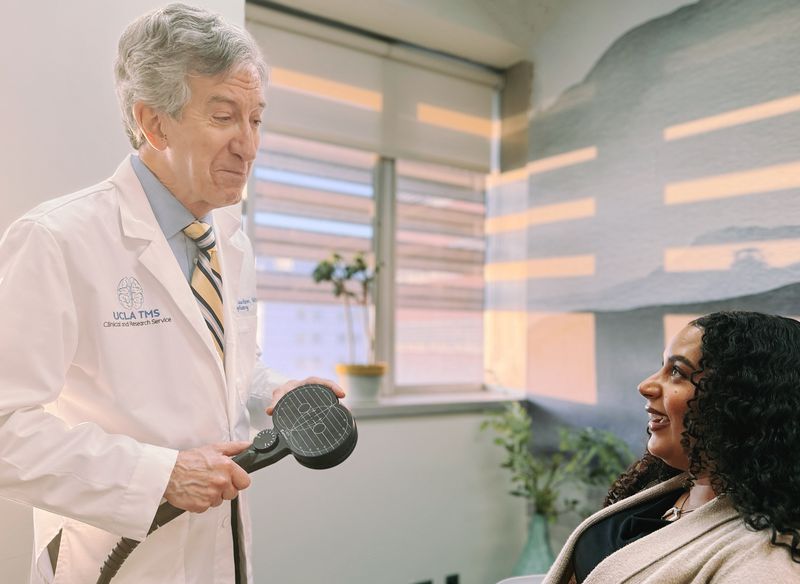
TMS is a brain network treatment.1,2 We place an electromagnetic coil against the head and deliver brief, focused magnetic pulses to specific brain regions. That energy spreads through brain networks, encouraging the brain to form new connections (a process called neuroplasticity) and helping to reset circuits that aren’t functioning as they should. By repeating treatments daily over several weeks, we can relieve symptoms of depression, anxiety, pain, OCD, tinnitus, and more.
What Can TMS Treat?
TMS has been used to treat a growing number of neurological and psychiatric conditions.1 Some uses are FDA-cleared, while others are supported by clinical evidence and offered as advanced therapies.
FDA-Cleared Conditions
- Major Depressive Disorder — FDA cleared in 2008. The most widely studied and commonly treated TMS condition. TMS relieves not only depression, but also the anxiety, sleep problems, and other symptoms that often accompany it. Routinely covered by most major insurance plans, including Medicare, when medications haven't provided adequate relief.3,4
- Obsessive-Compulsive Disorder (OCD) — FDA cleared in 2018. Uses a specialized deep TMS coil to target brain circuits involved in obsessive-compulsive behavior.
Advanced (Off-Label) Therapies
UCLA also offers TMS for conditions where clinical evidence supports its use, even though they are not yet FDA-cleared for TMS:
- Chronic Pain — including fibromyalgia, neuropathy, and nerve injury. Many patients experience meaningful pain reduction.
- Tinnitus — targets the overactive auditory cortex. About 50% of patients report meaningful improvement.
- Migraine, PTSD, auditory hallucinations, chronic fatigue, and more
When an off-label condition co-occurs with depression, it can often be treated within the same course of TMS.
What Happens During a Session
TMS sessions are quick and easy. You sit in a comfortable chair — fully awake and alert — while a small device is positioned against your head. There is no anesthesia, no sedation, and no recovery time. Each session typically takes 20 to 30 minutes, including a brief check-in with your psychiatrist — though sessions may run longer when treatment includes multiple components.
You can drive yourself to and from every appointment, return to work immediately afterward, and continue all of your normal daily activities. A standard course involves 30 to 36 sessions over 6 to 9 weeks, with sessions Monday through Friday.
Side Effects
TMS is one of the safest treatments in psychiatry.5 The most common side effects are mild and temporary:
- Scalp discomfort — A tapping sensation at the treatment site that typically decreases after the first few sessions. We can adjust the coil position and use a topical numbing cream if needed.
- Headache — Similar to a tension headache. Easily treated with over-the-counter pain medication and usually resolves within the first week.
- Fatigue — Some patients feel mildly tired after a session, but this rarely interferes with daily activities.
The risk of seizure is extremely low — about 1 in 50,000 sessions or fewer, and it exists only during the delivery of pulses.5 TMS does not cause memory loss, and most patients notice no cognitive effects or even report improvement.
References
- Somaa FA, et al. Transcranial magnetic stimulation in the treatment of neurological diseases. Front Neurol. 2022;13:793253. PubMed
- Bhattacharya A, et al. An overview of noninvasive brain stimulation: basic principles and clinical applications. Can J Neurol Sci. 2021;49(4):479-492. PubMed
- Fitzgerald PB, et al. A pooled analysis of repetitive transcranial magnetic stimulation (rTMS) versus sham treatment in major depressive disorder. Brain Stimul. 2016;9(5):730-736. PubMed
- Carpenter LL, Demitrack MA, et al. Transcranial magnetic stimulation (TMS) for major depression: a multisite, naturalistic, observational study of acute treatment outcomes in clinical practice. Depress Anxiety. 2012;29(7):587-596. PubMed
- Rossi S, et al. Safety and recommendations for TMS use in healthy subjects and patient populations, with updates on training, ethical and regulatory issues: Expert guidelines. Clin Neurophysiol. 2021;132(1):269-306. PubMed
- Dunner DL, Aaronson ST, Sackeim HA, Demitrack MA, et al. A multisite, naturalistic, observational study of transcranial magnetic stimulation for patients with pharmacoresistant major depressive disorder: durability of benefit over a 1-year follow-up period. J Clin Psychiatry. 2014;75(12):1394-1401. PubMed
- Kar SK. Predictors of response to repetitive transcranial magnetic stimulation in depression: a review of recent updates. Clin Psychopharmacol Neurosci. 2019;17(1):25-33. PubMed
Is TMS Right for You?
TMS may be a good option if you have depression that hasn't responded fully to medications, OCD, chronic pain, or tinnitus. TMS for depression is covered by the vast majority of major insurance plans, including Medicare, and TMS is FDA-cleared for both depression and OCD. Coverage for your situation depends on your plan and diagnosis — our care management team and insurance specialists will guide you. The first step is a referral from your current provider — we handle the rest, including insurance authorization.
Get StartedMedically reviewed by Evan Einstein, MD, MPH · Last reviewed June 2026