TMS for Depression
FDA-cleared, non-invasive brain stimulation that has helped tens of thousands of patients find relief when medications haven't been enough.
How TMS Treats Depression
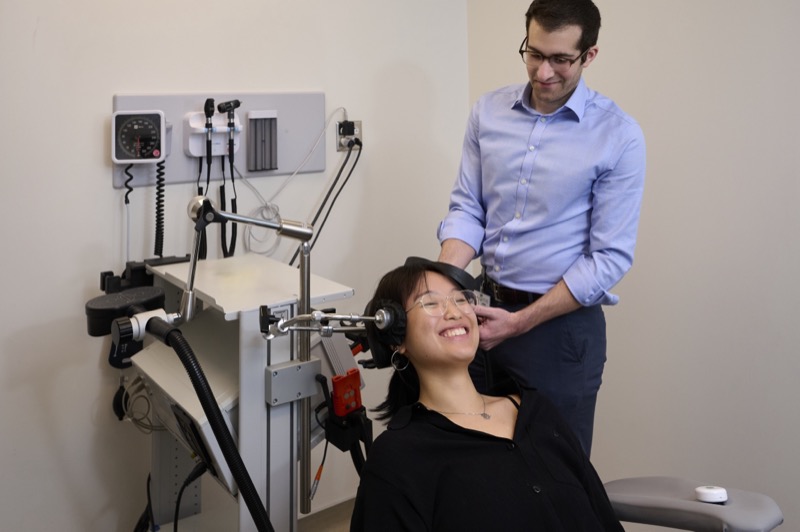
Repetitive Transcranial Magnetic Stimulation (rTMS) targets the left dorsolateral prefrontal cortex — a critical hub in the brain's mood regulation networks.1,2 Focused magnetic pulses delivered daily enhance neuroplasticity, helping the brain form new connections and reset neural circuits involved in depression.
Over 6–9 weeks, these changes compound, leading to improvement in mood, energy, motivation, and sleep.3,4 Unlike medications, TMS targets specific brain circuits directly — without systemic side effects.
Who Is TMS For?
TMS is primarily for patients with major depressive disorder who haven't responded adequately to antidepressant medications.5 Insurance requirements vary by plan; our team verifies your specific criteria and handles the authorization. TMS can also help patients with bipolar depression. If you're unsure whether you're a candidate, our team can help during an initial consultation.
You remain fully awake during treatment and can drive yourself home immediately after every session.
Kate's Journey
What to Expect & Response Timeline
A standard course involves 30–36 daily sessions (Monday–Friday), each lasting 20–30 minutes. A board-certified psychiatrist meets with you at every session to monitor progress and adjust treatment as needed. Most patients notice meaningful improvement within 2–3 weeks,4 though some respond earlier or later. The key is to complete the entire course.
Joe's Story
Insurance Coverage
TMS for depression is covered by the vast majority of major insurance plans, including Medicare. For details on coverage and the authorization process, visit our Insurance page or contact our intake coordinators at (310) 825-7471.
Ready to Get Started?
Your first step is a referral from your current provider — a psychiatrist, primary care physician, or therapist. Once we receive your referral, our team will contact you to schedule an evaluation, typically within one week.
Call: (310) 825-7471
Email: TMSReferrals@mednet.ucla.edu
References
- Somaa FA, et al. Transcranial magnetic stimulation in the treatment of neurological diseases. Front Neurol. 2022;13:793253. PubMed
- Bhattacharya A, et al. An overview of noninvasive brain stimulation: basic principles and clinical applications. Can J Neurol Sci. 2021;49(4):479-492. PubMed
- Fitzgerald PB, et al. A pooled analysis of repetitive transcranial magnetic stimulation (rTMS) versus sham treatment in major depressive disorder. Brain Stimul. 2016;9(5):730-736. PubMed
- Carpenter LL, Demitrack MA, et al. Transcranial magnetic stimulation (TMS) for major depression: a multisite, naturalistic, observational study of acute treatment outcomes in clinical practice. Depress Anxiety. 2012;29(7):587-596. PubMed
- Kar SK. Predictors of response to repetitive transcranial magnetic stimulation in depression: a review of recent updates. Clin Psychopharmacol Neurosci. 2019;17(1):25-33. PubMed
- Dunner DL, Aaronson ST, Sackeim HA, Demitrack MA, et al. A multisite, naturalistic, observational study of transcranial magnetic stimulation for patients with pharmacoresistant major depressive disorder: durability of benefit over a 1-year follow-up period. J Clin Psychiatry. 2014;75(12):1394-1401. PubMed
- Rossi S, et al. Safety and recommendations for TMS use in healthy subjects and patient populations, with updates on training, ethical and regulatory issues: Expert guidelines. Clin Neurophysiol. 2021;132(1):269-306. PubMed
Medically reviewed by Evan Einstein, MD, MPH · Last reviewed June 2026